

Today, Le Fox, a mathematician friend and I went down to our local art-house cinema to see Die Welle, or The Wave, a new German film. The story follows a 'cool' Ramones loving history/politics teacher who gets lumbered with teaching the Autocracy class rather than the Anarchy class as he'd originally wanted. The film follows an experiment in which he forms a sort of cult/gang/movement called The Wave, with slightly terrifying, if slightly hammed up consequences.
The film itself came across as somewhat patronising and pedagogical for the most part until a certain event (I won't spoil it for you) at which point I began to take it all a little more seriously. The most fascinating thing about it all is that it was in fact based upon a real life experiment in a Palo Alto school in 1967. A contemporary article by the teacher himself, recounts the story of The Third Wave as it was called and gives some idea of what the whole thing was about. It seems fairly hard to find and seems to be removed from many websites hosting it, so I've decided to post it in its entirity here below.
For years I kept a strange secret. I shared this silence with two hundred students. Yesterday I ran into one of those students. For a brief moment it all rushed back.
Steve Conigio had been a sophomore student in my World History class. We ran into each other quite by accident. It's one of those occasions experienced by teachers when they least expect. You're walking down the street, eating at a secluded restaurant, or buying some underwear when all of a sudden an ex-student pops up to say hello. In this case it was Steve running down the street shouting "Mr. Jones, Mr. Jones." In an embarrassed hug we greet. I had to stop for a minute to remember. Who is this young man hugging me? He calls me Mr. Jones. Must be a former student. What's his name? In the split second of my race back in time Steve sensed my questioning and backed up. Then smiled, and slowly raised a hand in a cupped position. My God He's a member of the Third Wave. It's Steve, Steve Conigio. He sat in the second row. He was a sensitive and bright student. Played guitar and enjoyed drama.
We just stood there exchanging smiles when without a conscious command I raised my hand in curved position. The salute was give. Two comrades had met long after the war. The Third Wave was still alive. "Mr. Jones do you remember the Third Wave?" I sure do, it was one of the most frightening events I ever experienced In the classroom. It was also the genesis of a secret that I and two hundred students would sadly share for the rest of our lives.
We talked and laughed about the Third Wave for the next few hours. Then it was time to part. It's strange, you most a past student In these chance ways, You catch a few moments of your life. Hold them tight. Then say goodbye. Not knowing when and if you'd ever see each other again. Oh, you make promises to call each other but It won't happen. Steve will continue to grow and change. I will remain an ageless benchmark in his life. A presence that will not change. I am Mr. Jones. Steve turns and gives a quiet salute. Hand raised upward in a shape of a curling wave. Hand curved in a similar fashion I return the gesture.
The Third Wave. Well at last it can be talked about. Here I’ve met a student and we've talked for hours about this nightmare. The secret must finally be waning. It's taken three years. I can tell you and anyone else about the Third Wave. It's now just a dream, something to remember, no it's something we tried to forget. That's how it all started. By strange coincidence I think it was Steve who started the Third Ways with a question. We were studying Nazi Germany and in the middle of a lecture I was interrupted by the question. How could the German populace claim ignorance of the slaughter of the Jewish people. How could the townspeople, railroad conductors, teachers, doctors, claim they knew nothing about concentration camps and human carnage. How can people who were neighbors and maybe even friends of the Jewish citizen say they weren't there when it happened. it was a good question. I didn't know the answer.
In as such as there were several months still to go in the school year and I was already at World War II, I decided to take a week and explore the question.
STRENGTH THROUGH DISCIPLINE
On Monday, I introduced my sophomore history students to one of the experiences that characterized Nazi Germany. Discipline. I lectured about the beauty of discipline. How an athlete feels having worked hard and regularly to be successful at a sport. How a ballet dancer or painter works hard to perfect a movement. The dedicated patience of a scientist in pursuit of an Idea. it's discipline. That self training. Control. The power of the will. The exchange of physical hardships for superior mental and physical facilities. The ultimate triumph.
To experience the power of discipline, I invited, no I commanded the class to exercise and use a new seating posture; I described how proper sitting posture assists mandatory concentration and strengthens the will. in fact I instructed the class in a sitting posture. This posture started with feet flat on the floor, hands placed flat across the small of the back to force a straight alignment of the spine. "There can't you breath more easily? You're more alert. Don't you feel better."
We practiced this new attention position over and over. I walked up and down the aisles of seated students pointing out small flaws, making improvements. Proper seating became the most important aspect of learning. I would dismiss the class allowing them to leave their desks and then call them abruptly back to an attention sitting position. In speed drills the class learned to move from standing position to attention sitting in fifteen seconds. In focus drills I concentrated attention on the feet being parallel and flat, ankles locked, knees bent at ninety degree angles, hands flat and crossed against the back, spine straight, chin down, head forward. We did noise drills in which talking was allowed only to be shown as a detraction. Following minutes of progressive drill assignments the class could move from standing positions outside the room to attention sitting positions at their desks without making a sound. The maneuver took five seconds.
It was strange how quickly the students took to this uniform code of behavior I began to wonder just how far they could be pushed. Was this display of obedience a momentary game we were all playing, or was it something else. Was the desire for discipline and uniformity a natural need? A societal instinct we hide within our franchise restaurants and T.V. programming.
I decided to push the tolerance of the class for regimented action. In the final twenty-five minutes of the class I introduced some new rules. Students must be sitting in class at the attention position before the late bell; all students Must carry pencils and paper for note taking; when asking or answering questions a student must stand at the side of their desk; the first word given in answering or asking a question is "Mr. Jones." We practiced short "silent reading" sessions. Students who responded in a sluggish manner were reprimanded and in every case made to repeat their behavior until it was a model of punctuality and respect. The intensity of the response became more important than the content. To accentuate this, I requested answers to be given in three words or less. Students were rewarded for making an effort at answering or asking questions. They were also acknowledged for doing this in a crisp and attentive manner. Soon everyone in the class began popping up with answers and questions. The involvement level in the class moved from the few who always dominated discussions to the entire class. Even stranger was the gradual improvement in the quality of answers. Everyone seemed to be listening more intently. New people were speaking. Answers *tarted to stretch out as students usually hesitant to speak found support for their effort.
As for my part in this exercise, I had nothing but questions. Why hadn't I thought of this technique before. Students seemed intent on the assignment and displayed Accurate recitation of facts and concepts. They even seemed to be asking better questions and treating each other with more compassion. How could this be? Here I was enacting an authoritarian learning environment and it seemed very productive. I now began to ponder not just how far this class could be pushed but how such I would change my basic beliefs toward an open classroom and self directed learning. Was all my belief in Carl Rogers to shrivel and die? Where was this experiment leading?
STRENGTH THROUGH COMMUNITY
On Tuesday, the second day of the exercise, I entered the classroom to find everyone sitting in silence at the attention position. Some of their faces were relaxed with smiles that come from pleasing the teacher. But most of the students looked straight ahead in earnest concentration. Neck muscles rigid. No sign of a smile or a thought or even a question. Every fibre strained to perform the deed. To release the tension I went to the chalk board and wrote in big letters "STRENGTH THROUGH DISCIPLINE." Below this I wrote a second law, "STRENGTH THROUGH COMMUNITY."
While the class sat in stern silence I began to talk lecture sermonize about the value of community. At this stage of the game I was debating in my own mind whether to stop the experiment or continue. I hadn't planned such intensity or compliance. In fact I was surprised to find the ideas on discipline enacted at all. While debating whether to stop or go on with the experiment I talked on and on about community. I made up stories from my experiences as an athlete, coach and historian. It was easy. Community is that bond between individuals who work and struggle together. It's raising a barn with your neighbors, it's feeling that you are a part of something beyond yourself, a movement, a team, La Raza, a cause.
It was too late to step back. I now can appreciate why the astronomer turns relentlessly to the telescope. I was probing deeper and deeper into my own perceptions and the motivations for group and individual action. There was much more to see and try to understand. Many questions haunted me. Why did the students accept the authority I was imposing? Where is their curiosity or resistance to this marshal behavior. When and how will this end?
Following my description of community I once again told the class that community like discipline must be experienced if it is to be understood. To provide an encounter with community I had the class recite in unison "Strength Through Discipline." "Strength Through Community." First I would have two students stand and call back our motto. Then add two more until finally the whole class was standing and reciting. It was fun. The students began to look at each other and sense the power of belonging. Everyone was capable and equal. They were doing something together. We worked on this simple act for the entire class period. We would repeat the mottos in a rotating chorus. or say then with various degrees of loudness. Always we said them together, emphasizing the proper way to sit, stand, and talk.
I began to think of myself as a part of the experiment. I enjoyed the unified action demonstrated by the students. It was rewarding to see their satisfaction and excitement to do more. I found it harder and harder to extract myself from the momentum and identity that the class was developing. I was following the group dictate as much as I was directing it.
As the class period was ending and without forethought I created a class salute. It was for class members only. To make the salute you brought your right hand up toward the right shoulder in a curled position. I called it the Third Wave salute because the hand resembled a wave about to top over. The idea for the three came from beach lore that waves travel in chains, the third wave being the last and largest of each series. Since we had a salute I made it a rule to salute all class members outside the classroom. When the bell sounded ending the period I asked the class for complete silence. With everyone sitting at attention I slowly raised my arm and with a cupped hand I saluted. It was a silent signal of recognition. They were something special. Without command the entire group of students returned the salute.
Throughout the next few days students in the class would exchange this greeting. You would be walking down the hall when all of a sudden three classmates would turn your way each flashing a quick salute. In the library or in gym students would be seen giving this strange hand jive. You would hear a crash of cafeteria food only to have it followed by two classmates saluting each other. The mystique of thirty individuals doing this strange gyration soon brought more attention to the class and its experiment into the German personality. Many students outside the class asked if they could join.
STRENGTH THROUGH ACTION
On Wednesday, I decided to issue membership cards to every student that wanted to continue what I now called the experiment. Not a single student elected to leave the room. In this the third day of activity there were forty-three students in the class. Thirteen students had cut class to be a part of the experiment. While the class sat at attention I gave each person a card. I marked three of the cards with a red X and informed the recipients that they had a special assignment to report any students not complying to class rules. I then proceeded to talk about the meaning of action. I explained how discipline and community were meaningless without action. I discussed the beauty of taking full responsibility for ones action. Of believing so thoroughly in yourself and your community or family that you will do anything to preserve, protect and extend that being. I stressed how hard work and allegiance to each Other would allow accelerated learning and accomplishment. I reminded students of what it felt like being in classes where competition caused pain and degradation. Situations in which students were pitted against each other In everything from gym to reading. The feeling of never acting, never being a part of something, never supporting each other.
At this point students stood without prompting and began to give what amounted to testimonials. "Mr. Jones, for the first time I'm learning lots of things." "Mr. Jones, why don't you teach like this all the time." I was shocked! Yes, I had been pushing information at them in an extremely controlled setting but the fact that they found it comfortable and acceptable was startling. It was equally disconcerting to realize that complex and time consuming written homework assignments on German life were being completed and even enlarged on by students. Performance in academic skill areas was significantly improving. They were learning more. And they seemed to want more. I began to think that the students might do anything I assigned. I decided to find out.
To allow students the experience of direct action I gave each individual a specific verbal assignment. "It's your task to design a Third Wave Banner. You are responsible for stopping any student that is not a Third Wave member from entering this room. I want you to remember and be able to recite by tomorrow the name and address of every Third Wave Member. You are assigned the problem of training and convincing at least twenty children in the adjacent elementary school that our sitting posture is necessary for better learning. It's your job to read this pamphlet and report its entire content to the class before the period ends. I want each of you to give me the name and address of one reliable friend that you think might want to join the Third Wave."...
To conclude the session on direct action, I instructed students in a simple procedure for initiating new members. It went like this. A new member had only to be recommended by an existing member and issued a card by me. Upon receiving this card the new member had to demonstrate knowledge of our rules and pledge obedience to them. My announcement unleashed a fervor.
The school was alive with conjecture and curiosity. It affected everyone. The school cook asked what a Third Wave cookie looked like. I said chocolate chip of course. Our principal came into an afternoon faculty meeting and gave me the Third Wave salute. I saluted back. The Librarian thanked me for the 30' banner on learning which she placed above the library entrance. By the end of the day over two hundred students were admitted into the order. I felt very alone and a little scared.
Most of my fear emanated from the incidence of "tattletaling". Though I formally appointed only three students to report deviate behavior, approximately twenty students came to me with reports about how Allan didn't salute, or Georgine was talking critically about our experiment. This incidence of monitoring meant that half the class now considered it their duty to observe and report on members of their class. Within this avalanche of reporting one legitimate conspiracy did seem underway ....
Three women in the class had told their parents all about our classroom activities. These three young women were by far the most intelligent students in the class. As friends they chummed together. They possessed a silent confidence and took pleasure in a school setting that gave them academic and leadership opportunity. During the days of the experiment I was curious how they would respond to the equalitarian and physical reshaping of the class. The rewards they were accustomed to winning just didn't exist in the experiment. The intellectual skills of questioning and reasoning were non existent. In the martial atmosphere of the class they seemed stunned and pensive. Now that I look back, they appeared much like the child with so called learning disability. They watched the activities and participated in a mechanical fashion. Whereas others jumped in, they held back, watching.
In telling their parents of the experiment they set up a brief chain of events. The rabbi for one of the parents called me at home. He was polite and condescending. I told him we were merely studying the German personality. He seemed delighted and told me not to worry. He would talk to the parents and calm their concern. In concluding this conversation I envisioned similar conversations throughout history in which the clergy accepted and apologized for untenable conditions. If only he would have raged in anger or simply investigated the situation I could point the students to an example of righteous rebellion. But no. The rabbi became a part of the experiment In remaining ignorant of the oppression in the experiment he became an accomplice and advocate.
By the end of the third day I was exhausted. I was tearing apart. The balance between role playing and directed behavior became indistinguishable. Many of the students were completely into being Third Wave Members. They demanded strict obedience of the rules from other students and bullied those that took the experiment lightly. Others simply sunk into the activity and took self assigned roles. I particularly remember Robert. Robert was big for his age and displayed very few academic skills. Oh he tried harder than anyone I know to be successful. He handed in elaborate weekly reports copied word for word from the reference books in the library. Robert is like so many kids in school that don't excel or cause trouble. They aren't bright, they can't make the athletic teams, and don't strike out for attention. They are lost. invisible. The only reason I came to know Robert at all is that I found him eating lunch in my classroom. He always ate lunch alone.
Well, the Third Wave gave Robert a place in school. At least he was equal to everyone. He could do something. Take part. Be meaningful. That's just what Robert did. Late Wednesday afternoon I found Robert following me and asked what in the world was he doing. He smiled (I don't think I had ever seen him smile) and announced, "Mr. Jones I'm your bodyguard. I'm afraid something will happen to you.
Can I do it Kr. Jones, please?" Given that assurance and smile I couldn't say no. I had a bodyguard. All day long he opened and closed doors for me. He walked always on my right. Just smiling and saluting other class members. He followed me every- where. In the faculty room (closed to students) he stood at silent attention while I gulped some coffee. When accosted by an English teacher for being a student in the "teachers' room" her just smiled and informed the faculty member that he wasn't a student. he was a body guard.
STRENGTH THROUGH PRIDE
On Thursday I began to draw the experiment to a conclusion. I was exhausted and worried. Many students were over the line. The Third Wave had become the center of their existence. I was in pretty bad shape myself. I was now acting instinctively as a dictator. Oh I was benevolent. And I daily argued to myself on the benefits of the learning experience. By this, the fourth day of the experiment I was beginning to lose my own arguments. As I spent more time playing the role I had less time to remember its rational origins and purpose. I found myself sliding into the role even when it wasn't necessary. I wondered if this doesn't happen to lots of people. We get or take an ascribed role and then bend our life to fit the image. Soon the image is the only identity people will accept. So we become the image. The trouble with the situation and role I had created was that I didn't have time to think where it was leading. Events were crushing around me. I worried for students doing things they would regret. I worried for myself.
Once again I faced the thoughts of closing the experiment or letting it go its own course. Both options were unworkable. If I stopped the experiment a great number of students would be left hanging. They had committed themselves in front of their peers to radical behavior. Emotionally and psychologically they had exposed themselves. If I suddenly jolted them back to classroom reality I would face a confused student- body for the remainder of the year. It would be too painful and demeaning for Robert and the students like him to be twisted back into a seat and told it's just a game. They would take the ridicule from the brighter students that participated in a measured and cautious way. I couldn't let the Roberts lose again.
The other option of just letting the experiment run its course was also out of the question. Things were already getting out of control. Wednesday evening someone had broken into the room and ransacked the place. (I later found out it was the father of one of the students. He was a retired air force colonel who had spent time in a German prisoner of war camp. Upon hearing of our activity he simply lost control Late in the evening he broke into the room and tore it apart. I found him that morning propped up against the classroom door. He told me about his friends that had been killed in Germany. He was holding on to me and shaking. In staccato words he pleaded that I understand and help him get home. I called his wife and with the help of a neighbor walked him home. We spent hours later talking about what he felt and did, but from that moment on Thursday morning I was more concerned with what might be happening at school.
I was increasingly worried about how our activity was affecting the faculty and other students in the school. The Third Wave was disrupting normal learning. Students were cutting class to participate and the school counselors were beginning to question every student in the class. The real gestapo in the school was at work. Faced with this experiment exploding in one hundred directions, I decided to try an old basketball strategy. When you're playing against all the odds the best action to take is to try the unexpected. That's what I did.
By Thursday the class had swollen in size to over eighty students. The only thing that allowed them all to fit was the enforced discipline of sitting in silence at attention. A strange calm is in effect when a room full of people sit in quite observation and anticipation. It helped me approach them in a deliberate way. I talked about pride. "Pride is more than banners or salutes. Pride Is something no one can take from you. Pride is knowing you are the best... It can't be destroyed ..."
In the midst of this crescendo I abruptly changed and lowered my voice to announce the real reason for the Third Wave. In slow methodic tone I explained what was behind the Third Wave. "The Third Wave isn't just an experiment or classroom activity. It's far more important than that. The Third Wave Is a nationwide program to find students who are willing to fight for political change in this country. That's right. This activity we have been doing has been practice for the real thing. Across the country teachers like myself have been recruiting and training a youth brigade capable of showing the nation a better society through discipline, community. pride, and action. If we can change the way that school is run, we can change the way that factories, stores, universities and all the other institutions are run. You are a selected group of young people chosen to help in this cause. If you will stand up and display what You have learned in the past four days...we can change the destiny of this nation. We can bring it a new sense of order. community, pride and action. A new purpose. Everything rests with you and your willingness to take a stand."
To give validity to the seriousness of my words I turned to the three women in the class whom I knew had questioned the Third Wave. I demanded that they leave the room. I explained why I acted and then assigned four guards to escort the women to the library and to restrain them from entering the class an Friday. Then in dramatic style I informed the class of a special noon rally to take place on Friday. This would be a rally for Third Wave Members only.
It was a wild gamble. I just kept talking. Afraid that if I stopped someone would laugh or ask a question and the grand scheme would dissolve in chaos. I explained how at noon on Friday a national candidate for president would announce the formation of a Third Wave Youth Program. Simultaneous to this announcement over 1000 youth groups from every part of the country would stand up and display their support for such a movement. I confided that they were the students selected to represent their area. I also questioned if they could make a good showing, because the press had been invited to record the event. No one laughed. There was not a murmur of resistance. quite the contrary. A fever pitch of excitement swelled across the room. "We can do it!" "Should we wear white shirts?" "Can we bring friends?" "Mr. Jones, have you seen this advertisement in Time magazine?"
The clincher came quite by accident. It was a full page color advertisement in the current issue of Time for some lumber products. The advertiser identified his product as the Third Wave. The advertisement proclaimed in big red, white and blue letters, "The Third Wave is coming." ''Is this part of the campaign, Mr. Jones?" "Is it a code or something?" "Yes. Now listen carefully. It's all set for tomorrow. Be in the small auditorium ten minutes before 12:00. Be seated. Be ready to display the discipline, community, and pride you have learned. Don't talk to anyone about this. This rally is for members only."
STRENGTH THROUGH UNDERSTANDING
On Friday, the final day of the exercise, I spent the early morning preparing the auditorium for the rally. At eleven thirty students began to ant their way into the room; at first a few scouting the way and then more. Row after row began to fill. A hushed silence shrouded the room. Third Wave banners hung like clouds over the assembly. At twelve o'clock sharp I closed the room and placed guards at each door. Several friends of mine posing as reporters and photographers began to interact with the crowd taking pictures and jotting frantic descriptive notes. A group photograph was taken. Over two hundred students were crammed into the room. Not a vacant seat could be found. The group seemed to be composed of students from many persuasions. There were the athletes, the social prominents, the student leaders, the loners, the group of kids that always left school early, the bikers, the pseudo hip, a few representatives of the school's dadaist click, and some of the students that hung out at the laundromat. The entire collection however looked like one force as they sat in perfect attention. Every person focusing on the T.V. set I had in the front of the room. No one moved. The room was empty of sound. It was like we were all witness to a birth. The tension and anticipation was beyond belief.
"Before turning on the national press conference, which begins in five minutes, I want to demonstrate to the press the extent of our training." With that, I gave the salute followed automatically by two hundred arms stabbing a reply. I then said the words "Strength Through Discipline" followed by a repetitive chorus. We did this again, and again. Each time the response was louder. The photographers were circling the ritual snapping pictures but by now they were ignored. I reiterated the importance of this event and asked once more for a show of allegiance. It was the last time I would ask anyone to recite. The room rocked with a guttural cry, "Strength Through Discipline."
It was 12:05. I turned off the lights in the room and walked quickly to the television set. The air in the room seemed to be drying up. It felt hard to breathe and even harder to talk. It was as if the climax of shouting souls had pushed everything out of' the room. I switched the television set on. I was now standing next to the television directly facing the room full of people. The machine came to life producing a luminous field of phosphorus light. Robert was at my side. I whispered to him to watch closely and pay attention to the next few minutes. The only light in the room was coming from the television and it played against the faces in the room. Eyes strained and pulled at the light but the pattern didn't change. The room stayed deadly still. Waiting. There was a mental tug of war between the people in the room and the television. The television won. The white glow of the test pattern didn't snap into the vision of a political candidate. It just whined on. Still the viewers persisted. There must be a program. It must be coming on. Where is it? The trance with the television continued for what seemed like hours. It was 12:07. Nothing. A blank field of white. It's not going to happen. Anticipation turned to anxiety and then to frustration. Someone stood up and shouted.
"There isn't any leader is there?" "Everyone turned in shock. first to the despondent student and then back to the television. Their faces held looks of disbelief.
In the confusion of the moment I moved slowly toward the television. I turned it off. I felt air rush back into the room. The room remained in fixed silence but for the first time I could sense people breathing. Students were withdrawing their arms from behind their chairs. I expected a flood of questions, but instead got intense quietness. I began to talk. Every word seemed to be taken and absorbed.
"Listen closely, I have something important to tell you." "Sit down." "There is no leader! There is no such thing as a national youth movement called the Third Wave. You have been used. Manipulated. Shoved by your own desires into the place you now find yourself. You are no better or worse than the German Nazis we have been studying."
"You thought that you were the elect. That you were better than those outside this room. You bargained your freedom for the comfort of discipline and superiority. You chose to accept that group's will and the big lie over your own conviction. Oh, you think to yourself that you were just going along for the fun. That you could extricate yourself at any moment. But where were you heading? How far would you have gone? Let me show you your future." With that I switched on a rear screen projector. It quickly illuminated a white drop cloth hanging behind the television. Large numbers appeared in a countdown. The roar of the Nuremberg Rally blasted into vision. My heart was pounding. In ghostly images the history of the Third Reich paraded into the room. The discipline. The march of super race. The big lie. Arrogance, violence, terror. People being pushed into vans. The visual stench of death camps. Faces without eyes. The trials. The plea of ignorance. I was only doing my job. My job. As abruptly as it started the film froze to a halt on a single written frame. "Everyone must accept the blame No one can claim that they didn't in some way take part."
The room stayed dark as the final footage of film flapped against the projector. I felt sick to my stomach. The room sweat and smelt like a locker room. No one moved. It was as if everyone wanted to dissect the moment, figure out what had happened. Like awakening from a dream and deep sleep, the entire room of people took one last look back into their consciousness. I waited for several minutes to let everyone catch up. Finally questions began to emerge. All of the questions probed at imaginary situations and sought to discover the meaning of this event.
In the still darkened room I began the explanation. I confessed my feeling of sickness and remorse. I told the assembly that a full explanation would take quite a while. But to start. I sensed myself moving from an introspective participant in the event toward the role of teacher. It's easier being a teacher. In objective terms I began to describe the past events.
"Through the experience of the past week we have all tasted what it was like to live and act in Nazi Germany. We learned what it felt like to create a disciplined social environment. To build a special society. Pledge allegiance to that society. Replace reason with rules. Yes, we would all have made good Germans. We would have put on the uniform. Turned our head as friends and neighbors were cursed and then persecuted. Pulled the locks shut. Worked in the "defense" plants. Burned ideas. Yes, we know in a small way what it feels like to find a hero. To grab quick solution. Feel strong and in control of destiny. We know the fear of being left out. The pleasure of doing something right and being rewarded. To be number one. To be right. Taken to an extreme we have seen and perhaps felt what these actions will lead to. we each have witnessed something over the past week. We have seen that fascism is not just something those other people did. No. it's right here. In this room. In our own personal habits and way of life. Scratch the surface and it appears. Something in all of us. We carry it like a disease. The belief that human beings are basically evil and therefore unable to act well toward each other. A belief that demands a strong leader and discipline to preserve social order. And there is something else. The act of apology.
"This is the final lesson to be experienced. This last lesson is perhaps the one of greatest importance. This lesson was the question that started our plunge in studying Nazi life. Do you remember the question? It concerned a bewilderment at the German populace claiming ignorance and non-involvement in the Nazi movement. If I remember the question. it went something like this. How could the German soldier, teacher, railroad conductor, nurse. tax collector. the average citizen, claim at the end of the Third Reich that they knew nothing of what was going on. How can a people be a part of something and then claim at the demise that they were not really involved' What causes people to blank out their own history? In the next few minutes and perhaps years, you will have an opportunity to answer this question."
"If our enactment of the Fascist mentality is complete not one of you will ever admit to being at this final Third Wave rally. Like the Germans, you will have trouble admitting to yourself that you come this far. You will not allow your friends and parents to know that you were willing to give up individual freedom and power for the dictates of order and unseen leaders. You can't admit to being manipulated. Being a follower. To accepting the Third Wave as a way of life. You won't admit to participating in this madness. You will keep this day and this rally a secret. It's a secret I shall share with you."
I took the film from the three cameras in the room and pulled the celluloid into the exposing light. The deed was concluded. The trial was over. The Third Wave had ended. I glanced over my shoulder. Robert was crying. Students slowly rose from their Chairs and without words filed into the outdoor light. I walked over to Robert and threw my arms around him. Robert was sobbing. Taking in large uncontrollable gulps of air. "It's over." it's all right." In our consoling each other we became a rock in the stream of exiting students. Some swirled back to momentarily hold Robert and me. Others cried openly and then brushed away tears to carry on. Human beings circling and holding each other. Moving toward the door and the world outside. For a week in the middle of a school year we had shared fully in life. And as predicted we also shared a deep secret. In the four years I taught at Cubberley High School no one ever admitted to attending the Third Wave Rally. Oh, we talked and studied our actions intently. But the rally itself. No. It was something we all wanted to forget.


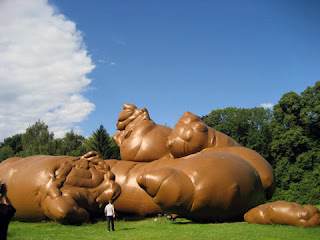


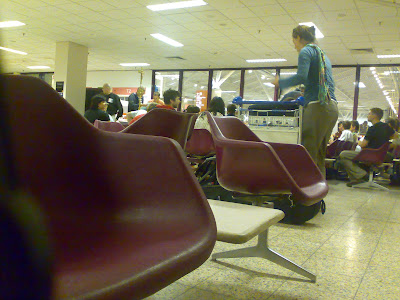 I was eyed with a certain degree of suspicion so decided to take a photo somewhat incognito (and therefore badly framed) - check out the massive golden cross on the left. I must say, I was slightly taken aback by the whole thing. I'd never seen so much devotion in a public place before and I was impressed.



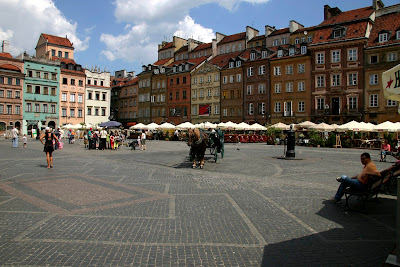 Wandering around European cities, one becomes accustomed to the sight of buildings which if not exactly crumbling, show all of their three hundred or so years. Here everything comes across a little bit Disney. The entire old town is so incredibly pristine that rather than being 300 years old, most buildings look as if they have travelled through time. I wouldn't be surprised if the whole Stare Miasto was injection moulded in one piece from fadeproof plastic in a Detroit factory and shipped over as part of some covert Marshall plan. It's a great shame that so much of this great city was destroyed in the carnage of 1939-45.


